

Tips for making your product manufacturable
Between coming up with an idea and actually bringing a product to market lies an intensive process. When making your product manufacturable, you may encounter various challenges. That’s why we like to share early on what to look out for. The most important tip is to take time in the preliminary phase to be clear about exactly what you want – not only in terms of costs, but also quantities and quality.
From idea to drawing board, and from design phase to sometimes a prototype, and then to (series) production – many companies go through this process multiple times. Yet in practice, many don’t think about the manufacturability of their design until late in the process. This often leads to production delays later on. In our view, manufacturability doesn’t start with machining profiles and sheets, but right at the drawing board.
It’s at that stage that we are often not yet involved, but here are a few tips. It’s best to clarify the following points as early as possible:
- What should or may it cost? We’re not only talking about the price of your end product, but also about the costs of the development process (link).
- What quantities are involved? Will you quickly recoup the cost of a prototype or a special (casting) mould because you will later produce large series? Or is your product a one-off?
- What is the purpose of your product? Will it be a recurring product? Does it need to meet specific (high) quality standards or certifications?
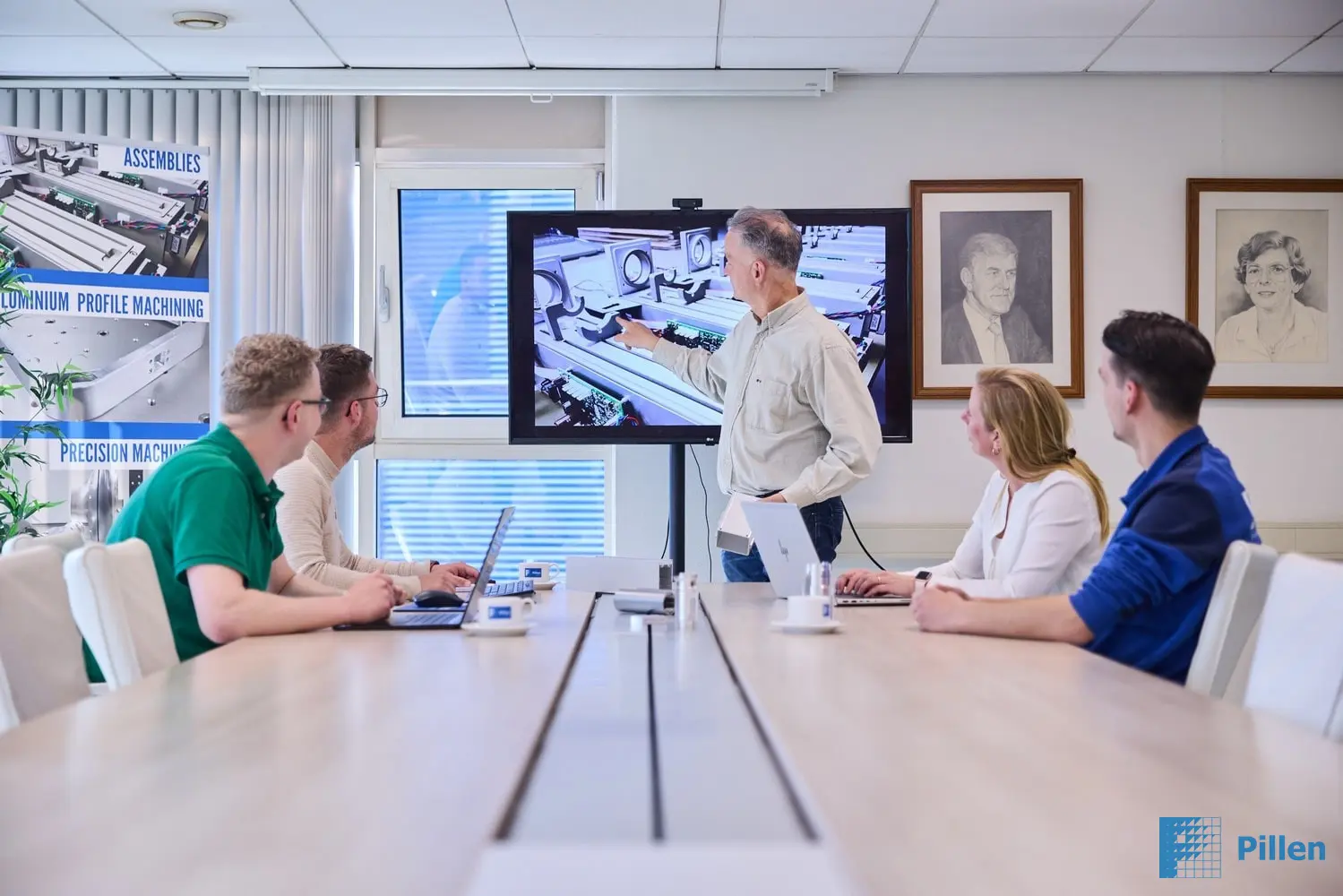
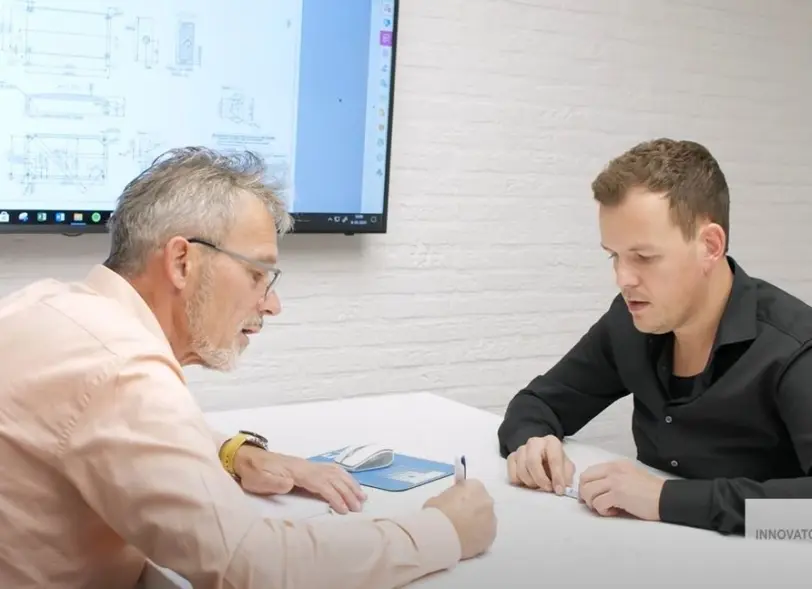
When we receive an order request, we start by analysing your existing design for manufacturability. We ask about your approach, what the cost limits are, and can thus form a good picture of feasibility.
Design for Manufacturability
Thinking carefully about what you want to produce ideally starts even earlier – at the drawing board. We call this design for manufacturability (DFM). It means taking into account how a product will be made already during the design stage.
Still, we regularly see very strict requirements and tolerances being specified in that design phase. We help think through what must be and what may be. This can be done on paper, but also by producing and testing a prototype or trial series.
Sometimes there are also specific requirements for material selection. In almost 70 years, our technical team has gained experience with various materials and machining processes. We think material-independently, and from that perspective, we look at your design.
Material selection
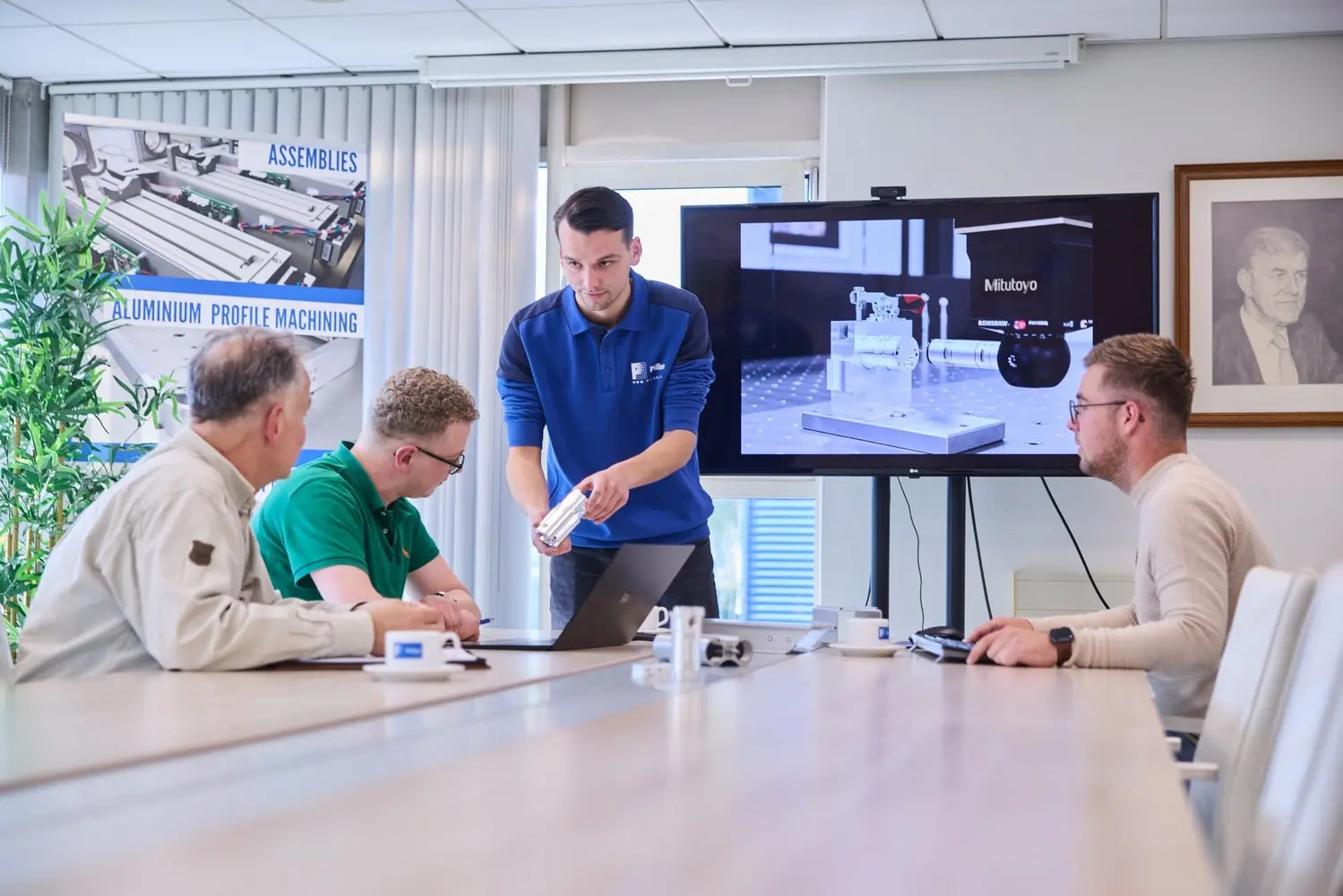
Today there are more and more possibilities when it comes to choosing materials. We work with steel, aluminium, wood and plastics, and advise you on the pros and cons of suitable options. Together with you and your design team, we explore what’s possible.
Production method
The choice of material partly determines the production method. What material needs to be processed? What is the purpose? Are there specific requirements? Can we turn or mill your product, or perhaps even 3D print it? Most processes can be done in-house, but for additional production needs we gladly involve our partners – because everyone has their own specialism.
Prototyping
Creating a prototype is a great step to test whether your design meets requirements. It allows you to test one or several pieces to check if the required dimensions remain within tolerance. We also look at the production process: are the expected cycle times being met? Do production costs stay within calculated margins?
Prototyping is an extra step in the process, but it can bring benefits if you go on to produce larger orders. We eliminate errors from the process so that we can produce your product quickly and at lower cost. We have done this before for our client Cooll.
- In short – steps to make your product manufacturable:
Design for manufacturability (DFM): smart design is smart production. - Materials are more than a matter of taste: choose consciously and think outside the box.
- Choose production processes that fit the product.
- Ensure quality without over-engineering: a good manufacturable design meets all necessary requirements – but no more than that.
Finally: we make it manufacturable together
Successfully making a product manufacturable is not a one-way street. It’s a collaboration between customer and manufacturer. It starts with asking the right questions: what may it cost? What must it do? And what is truly important? Once that foundation is clear, we can get to work with common sense and creativity.